
Fognet, Walker, Spectacle...

Welcome.
I took a break but I have still been writing. I got stuck on writing about physical, mental, and hybrid tools. Sometimes things require more work/research than you’d think or want to explore.
A year ago I started writing ideas around media and platforms designed for exposure flatten culture into repeatable patterns, eroding the conditions for subcultures. Networks built at human scale where trust, context, and depth can accumulate before being pushed into performance. Protecting spaces where meaning grows slowly.
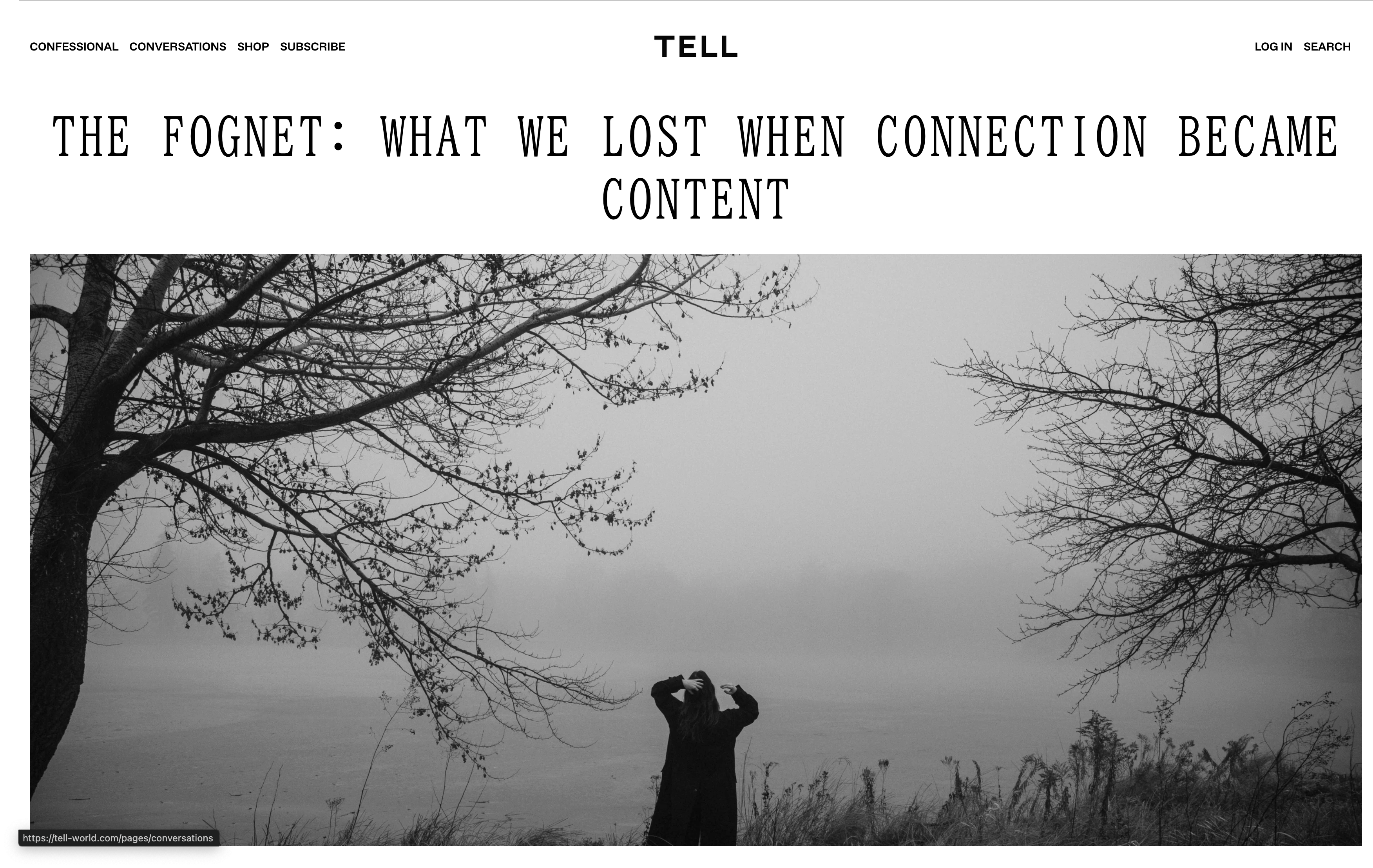
“Fognet sets a natural pace where context, trust, and depth can accumulate instead of being stripped away. It values rhythm over reach and presence over performance. The fog isn’t confusion but rather an atmosphere where ideas can stay unsharpened long enough to grow, porous enough to shift and mature before they’re seen. In that opacity, culture becomes less about production and more about relation.”
Please read the full article on TELL. A story-telling platform focused on the Pleasures and Treasures of the midwest. A living ecosystem shaped by the people inside it.
-
I was asked to speak at the 40th anniversary of the Walker Art Center insights lecture series. I will be talking about my career through the lens of attention, growth and pivots.
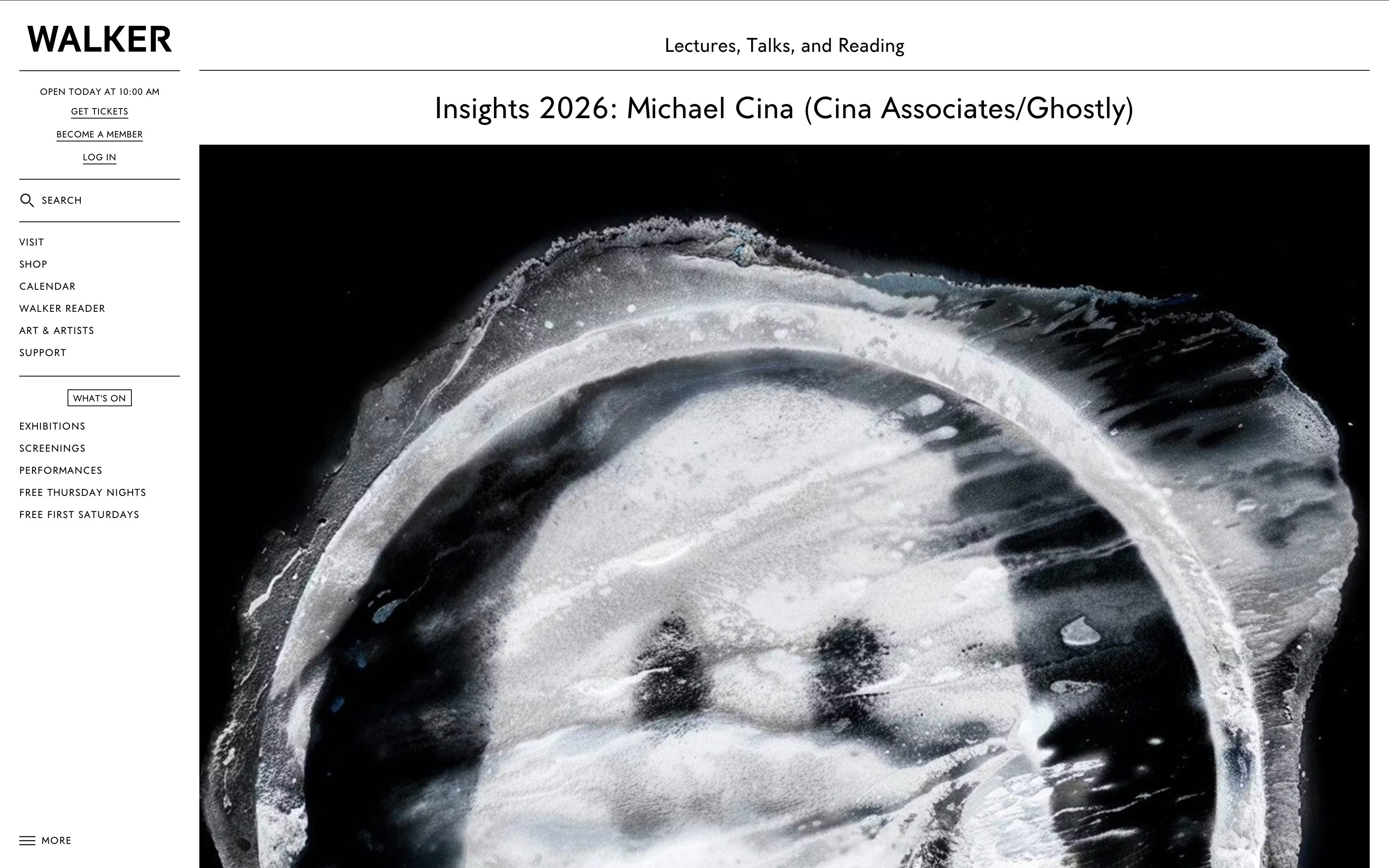
The event is on March 18 and you can get tickets here.
-
The last few months I’ve been thinking about Guy Debord again. In The Society of the Spectacle, Debord describes a world where social life has been replaced by its representation. Real experience gets swapped out for images of experience. Mass media, advertising, consumer culture: they sell you things while they restructure how you relate to other people. Everything becomes something to watch. You stop living and start consuming the appearance of living. This deeply hit a nerve with me and it was written in 1967.
Hype culture is the “spectacle” in its most distilled and late-stage form. It took the logic Debord identified (images replacing reality, consumption replacing connection) and turned it into an entire economy of drop anticipation. The product barely matters anymore. BUT you were there, you knew, and you are special because you got it and showed raw FOMO to everyone. It jumped the shark years ago, and most people ssense that (I hope), but it keeps running with “new arrivals” because the machinery doesn’t need substance. It requires your attention.
I was indifferent to it for a long time until I was genuinely repulsed. Aesthetics are tangled up in all of this. Hype culture uses and relies on aesthetics. It fragments visual language from context, from craft, from meaning, and converts it into a lifeless vaporous status “thing.” Working in a visual field while the spectacle makes visual communication disposable holds a lot of tension for me. I wonder where that leaves design…
It leads me to a broader question that I think is the real one underneath all of this: where do I focus? What things matter most in time? Not in the abstract. Right now, in this specific moment.
Hype culture wastes materials and time but the wider pollution is attentional. It trains you to move on before anything settles. Debord understood this. The spectacle distracts you from real life and it erodes your ability to recognize real life when it’s in front of you.
Living in Minneapolis right now, you feel two versions of this collision at once. The ICE occupation of the city has been oppressive to say the least. It’s its own kind of spectacle: federal power performing, demanding that you watch, that you feel small, that you accept the image of authority. The community response has been truly beautiful. People showing up for each other, helping, giving themselves. People gathering. Not performing or gathering for content, but actually being in a room together, figuring things out, doing real things that affect real lives.
The last couple of years I’ve been dedicated to helping my local arts community in whatever ways I can. There are many ways to do it. But since January, with everything that’s shifted, gathering in real life and sharing time feels more than “nice.” It truly feels vital. Debord had a concept for this kind of work: détournement, the act of turning the spectacle’s tools back against it. When you redirect attention away from the noise and toward something with actual substance (a conversation, a collaboration, a room full of people making things), you’re building a counter-structure. Minneapolis has been here before.
I'd encourage you to invite people from your community to get together. It doesn't need a reason or a format. Just a room and some willingness. Showing up and presence actually matters and have never been “content.” See what grows.
-
Bonus beats: Herb Sundays, Season 11 is upon us.
- Links: Cina Associates, Cina Art, Public Type